UVB-76 Decryption
Non-stop buzzer at 4625kHz
If you tune to shortwave 4625kHz, a short buzz will repeat throughout the day. Sometimes the sound stops and Russian call signs, numbers, and passwords are read.
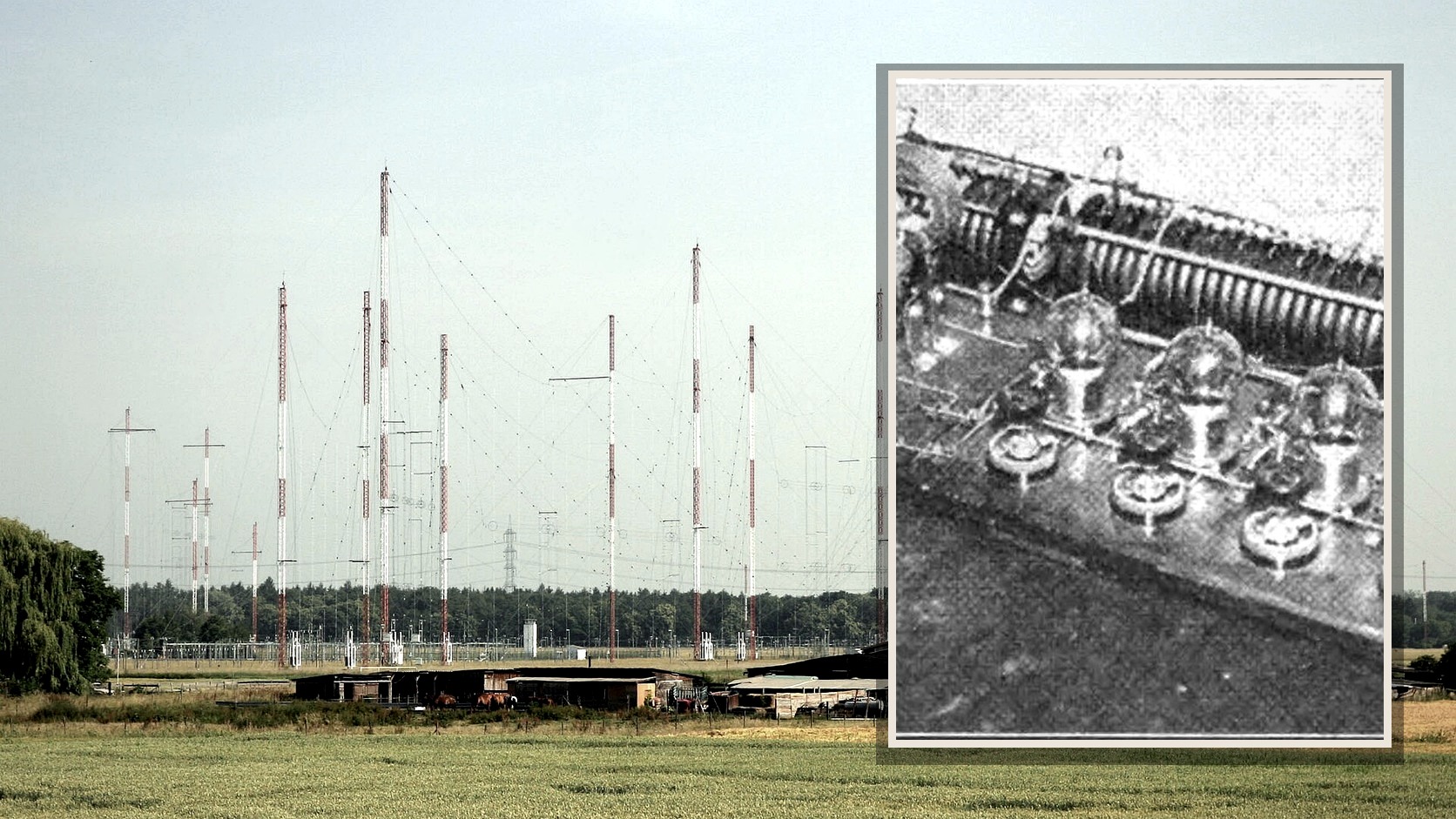
UVB-76 is very likely to be a Russian military channel marker and code command network rather than a supernatural broadcast. However, there is no public physical evidence to support the famous explanation that it is a nuclear automatic retaliation system. We read the form, but not the meaning.
Prologue: The night that broke records
After dark, I spread out the materials on the desk. The first thing that caught my eye was not the correct answer, but an imbalance. Some scenes were as clear as a photograph, while other times were completely empty. People try to capture a clear scene and explain the whole thing, but I marked the blank section first. Mysteries can arise because there are many clues, but they can also arise because the distance between clues is too great.
UVB-76 series signals, called ‘buzzers,’ have been observed since the Cold War, and their call signs have changed several times. A public voice message has a certain format, but its meaning cannot be read unless the recipient has a codebook. The Internet's nuclear war/dead hand hypothesis stands on much weaker evidence than the existence of broadcasting.
I deliberately read the famous hypothesis last. When you first encounter a conclusion, all objects and symbols seem to exist for that conclusion. So, I organized the timetable, places, objects, and original text first, and placed witnessing and interpretation in separate columns. The novel-like atmosphere was derived from the cold texture of actual records, not from made-up secrets.

Case Files: What I Could Believe
| number | confirmed record | current reliability |
|---|---|---|
| 1 | The signal transmits a channel marker sound for a long time at a shortwave of 4625kHz. | high |
| 2 | There are times when the marker stops and a Russian voice message is transmitted. | high |
| 3 | Voices appear in repetitive formats such as call signs, receiving groups, passwords, and number sequences. | high |
| 4 | Call signs and transmission characteristics changed over time. | middle |
| 5 | The operating agency and text of the message have not been officially released. | middle |
The exact operating unit, recipients, codebook, text and mission of each voice telegraph have not been publicly resolved.
The term ‘unexplained’ is not the same as saying ‘it is supernatural’, ‘it is a grand conspiracy’, or ‘this hypothesis is the only possible one’. I didn't count the blank spaces as evidence.
Reconstructing the Scene: Finally, a Certain Point
The location was changed from the stage in my head to the actual route. We divided the starting point, the final confirmation point, and the location where the object was found and calculated the minimum time needed in between. As we removed the dramatic depictions of later times, small, concrete elements such as sound and light, doors and roads, paper and ink, and the spacing of symbols came to the fore.
Instead of determining the character's mind, I wrote down the character's actions first. The same behavior can occur due to fear, planning, mistake, or fatigue. If it is a password, the same symbol can be a sound, a word, a delimiter, or a meaningless code. After writing down all possible roles, I deleted roles that conflicted with other records one by one.
Clue 1. The signal transmits the channel marker sound for a long time at shortwave 4625kHz.
I first divided this sentence into three pieces. It indicated who first confirmed it, how close the confirmation was to the event, and where later interpretations were attached. As old events and codes are cited repeatedly, they turn into stories that are clearer than the original text. However, clarity is not the same thing as accuracy. In my notebook, I separated direct records, traces left behind by objects, and later inferences in different colors.
This clue was then matched against the record: “There are instances where the marker is interrupted and a Russian voice message is transmitted.” If a hypothesis only explains the first sentence and avoids the second, it is not a good hypothesis. In particular, if the question “Is the marker sound an indication of transmitter occupancy or line status monitoring?” was not passed, the attractive explanation score was also lowered. I looked longer at the clues that made the conclusion uncomfortable than the clues that made the conclusion great.
Examining the clues this way makes the case seem a little less dramatic. Instead, there is a boundary as to how much is certain and how much is imagination. With that boundary, you can revise your reasoning when new data comes out. The most dangerous moment in American records is not when a false hypothesis is developed, but when a hypothesis is converted into a statement of fact.
Clue 2. There are times when the marker stops and a Russian voice message is transmitted.
I first divided this sentence into three pieces. It indicated who first confirmed it, how close the confirmation was to the event, and where later interpretations were attached. As old events and codes are cited repeatedly, they turn into stories that are clearer than the original text. However, clarity is not the same thing as accuracy. In my notebook, I separated direct records, traces left behind by objects, and later inferences in different colors.
This clue was then matched with the record that “the voice shows a repeating pattern, such as a call sign, a calling group, a password, or a string of numbers.” If a hypothesis only explains the first sentence and avoids the second, it is not a good hypothesis. In particular, if you did not pass the question, “How similar is the voice format to the general military professional format?”, the attractive explanation score was also lowered. I looked longer at the clues that made the conclusion uncomfortable than the clues that made the conclusion great.
Examining the clues this way makes the case seem a little less dramatic. Instead, there is a boundary as to how much is certain and how much is imagination. With that boundary, you can revise your reasoning when new data comes out. The most dangerous moment in American records is not when a false hypothesis is developed, but when a hypothesis is converted into a statement of fact.
Clue 3. The voice shows a repetitive format such as call sign, receiving group, password, and number sequence.
I first divided this sentence into three pieces. It indicated who first confirmed it, how close the confirmation was to the event, and where later interpretations were attached. As old events and codes are cited repeatedly, they turn into stories that are clearer than the original text. However, clarity is not the same thing as accuracy. In my notebook, I separated direct records, traces left behind by objects, and later inferences in different colors.
This clue was then matched with the record that “call signs and transmission characteristics changed over time.” If a hypothesis only explains the first sentence and avoids the second, it is not a good hypothesis. In particular, the attractive explanation score was lowered if it did not pass the question, “How can we verify whether the correlation between the increase in broadcasting activity and actual events is more than a coincidence?” I looked longer at the clues that made the conclusion uncomfortable than the clues that made the conclusion great.
Examining the clues this way makes the case seem a little less dramatic. Instead, there is a boundary as to how much is certain and how much is imagination. With that boundary, you can revise your reasoning when new data comes out. The most dangerous moment in American records is not when a false hypothesis is developed, but when a hypothesis is converted into a statement of fact.
Clue 4. Call signs and transmission characteristics changed over time.
I first divided this sentence into three pieces. It indicated who first confirmed it, how close the confirmation was to the event, and where later interpretations were attached. As old events and codes are cited repeatedly, they turn into stories that are clearer than the original text. However, clarity is not the same thing as accuracy. In my notebook, I separated direct records, traces left behind by objects, and later inferences in different colors.
This proviso was then matched against the record: “The operating agency and message plaintext have not been officially released.” If a hypothesis only explains the first sentence and avoids the second, it is not a good hypothesis. In particular, if the question “Is the marker sound an indication of transmitter occupancy or line status monitoring?” was not passed, the attractive explanation score was also lowered. I looked longer at the clues that made the conclusion uncomfortable than the clues that made the conclusion great.
Examining the clues this way makes the case seem a little less dramatic. Instead, there is a boundary as to how much is certain and how much is imagination. With that boundary, you can revise your reasoning when new data comes out. The most dangerous moment in American records is not when a false hypothesis is developed, but when a hypothesis is converted into a statement of fact.
Clue 5. The operating organization and plain text of the message have not been officially released.
I first divided this sentence into three pieces. It indicated who first confirmed it, how close the confirmation was to the event, and where later interpretations were attached. As old events and codes are cited repeatedly, they turn into stories that are clearer than the original text. However, clarity is not the same thing as accuracy. In my notebook, I separated direct records, traces left behind by objects, and later inferences in different colors.
This clue was then matched against the record: “The signal transmits a channel marker sound for a long time at shortwave 4625kHz.” If a hypothesis only explains the first sentence and avoids the second, it is not a good hypothesis. In particular, if you did not pass the question, “How similar is the voice format to the general military professional format?”, the attractive explanation score was also lowered. I looked longer at the clues that made the conclusion uncomfortable than the clues that made the conclusion great.
Examining the clues this way makes the case seem a little less dramatic. Instead, there is a boundary as to how much is certain and how much is imagination. With that boundary, you can revise your reasoning when new data comes out. The most dangerous moment in American records is not when a false hypothesis is developed, but when a hypothesis is converted into a statement of fact.

put three hypotheses on the same scale
Hypotheses were not evaluated in fancy sentences. We wrote down the number of explanatory clues, the number of new assumptions required, and the degree to which they can withstand contrary evidence. If even if you completely explain one clue, you have to discard the rest of the record, it is not a good hypothesis.
Hypothesis A. It is used as a channel maintenance/call signal in the Russian military communication network.
This explanation has the advantage of accepting relatively few assumptions: “The signal transmits a channel marker sound for a long time at shortwave 4625kHz.” Assuming this hypothesis was correct, I walked through time and space again from the beginning. The actions and time required for each person, object, or symbol to move to the next location were written down. There was always a hidden assumption at the point where the sentence broke.
The biggest weakness is that it does not sufficiently explain that “voices show repetitive patterns such as call signs, recipient groups, passwords, and strings of numbers.” Anything can be explained if you keep adding accomplices, coincidences, and lost objects to protect your hypothesis. But such explanations do not predict new clues. I increased the score only when two independent records pointed in the same direction, and lowered the score each time a new exception was loaded.
So whether to adopt this hypothesis as a conclusion was judged based on cost, not atmosphere. The number of explanatory clues, the number of new assumptions required, and the degree to which they can withstand contrary evidence are listed in the same table. Fictional scenes were used to show the texture of facts, but not as evidence to fill in the blanks.
Hypothesis B. It is a one-way command network that sends disposable codebook messages to multiple units.
This explanation has the advantage of making relatively few assumptions: “There are cases where the marker is interrupted and a Russian voice message is transmitted.” Assuming this hypothesis was correct, I walked through time and space again from the beginning. The actions and time required for each person, object, or symbol to move to the next location were written down. There was always a hidden assumption at the point where the sentence broke.
The biggest weakness is that it does not sufficiently explain “call signs and transmission characteristics changed over time.” Anything can be explained if you keep adding accomplices, coincidences, and lost objects to protect your hypothesis. But such explanations do not predict new clues. I increased the score only when two independent records pointed in the same direction, and lowered the score each time a new exception was loaded.
So whether to adopt this hypothesis as a conclusion was judged based on cost, not atmosphere. The number of explanatory clues, the number of new assumptions required, and the degree to which they can withstand contrary evidence are listed in the same table. Fictional scenes were used to show the texture of facts, but not as evidence to fill in the blanks.
Hypothesis C. It is a special signal linked to a nuclear command or automatic retaliation system.
This explanation has the advantage of accepting with relatively few assumptions that “voices exhibit repetitive patterns such as call signs, recipient groups, passwords, and strings of numbers.” Assuming this hypothesis was correct, I walked through time and space again from the beginning. The actions and time required for each person, object, or symbol to move to the next location were written down. There was always a hidden assumption at the point where the sentence broke.
The biggest weakness is that it does not sufficiently explain “the operating organization and message plaintext have not been officially released.” Anything can be explained if you keep adding accomplices, coincidences, and lost objects to protect your hypothesis. But such explanations do not predict new clues. I increased the score only when two independent records pointed in the same direction, and lowered the score each time a new exception was loaded.
So whether to adopt this hypothesis as a conclusion was judged based on cost, not atmosphere. The number of explanatory clues, the number of new assumptions required, and the degree to which they can withstand contrary evidence are listed in the same table. Fictional scenes were used to show the texture of facts, but not as evidence to fill in the blanks.
Conclusions I threw away
When I began my research, I too was drawn to the most popular explanations. It summed up events in one sentence and gave intention to every object. However, when compared with the original record, each blank space required a new coincidence. I erased that conclusion and started again. Good reasoning is less about adding things and more about removing unnecessary assumptions.
I was wary of matching voice messages with incident dates. Any pattern can be created by selecting the ones that stand out among the numerous broadcasts and connecting them to international events. The format and frequency operation are close to military communications, but the specific mission is not closed without a codebook.
In particular, details repeated in later articles and on the Internet were separated from the original source. Just because the same sentence appears in multiple places does not mean there are multiple independent sources. First, we checked the possibility that a single error had been duplicated. After this process, the case became less flashy, but the weight of the remaining clues actually increased.

Counter-evidence: Sentences that will destroy my reasoning.
As long as I collect data that supports my conclusion, the investigation will be over quickly. So I placed the three most uncomfortable questions next to the conclusion.
- Is the marker tone an indication of transmitter occupancy or line status monitoring?
- How similar is the audio format to the regular military professional format?
- How can we verify whether the correlation between increased broadcast activity and actual events is more than a coincidence?
These questions are not decoration. It is a switch that changes the conclusion when new data comes in. The ranking of hypotheses changes immediately when directly linked information such as original sightings, preserved physical evidence, comparison samples from the same author, or independent dating is revealed. Conversely, when only the word ‘plausible’ increased, the ranking did not change.
Final Reason: What I arrived at
UVB-76 is very likely to be a Russian military channel marker and code command network rather than a supernatural broadcast. However, there is no public physical evidence to support the famous explanation that it is a nuclear automatic retaliation system. We read the form, but not the meaning.
This conclusion is not a completely definitive ruling. This is a direction that requires the fewest assumptions and simultaneously explains the most clues within the currently public records. It is also clear that what comes out will change the conclusion. Reliable original records, verifiable forensic data, and independent evidence directly linking people and objects are needed.
I do not write that the case is closed. Instead, write down how far it can be closed. That boundary is the result of this survey. The fun of mystery is not that anything is possible. The goal is to find out which of the possible explanations can be discarded.

Additional Research Notes 1. Redraw the timeline
I spread out the data on the desk again and this time drew a conclusion. The place and time were listed in one line, leaving only “The signal transmits a channel marker sound for a long period of time at shortwave 4625kHz.” Unconfirmed sections were not filled in by imagination but were marked with empty squares. As the square grew, the reliability of the hypothesis that had to pass through that section decreased.
Above it, I posted the explanation, “It is used as a channel maintenance/call signal for the Russian military communication network.” At first everything seemed correct, but when we asked the question, “Is the marker tone an indication of transmitter occupancy or line status monitoring?” a weak connection was revealed. Hypotheses must withstand questioning. If you keep coming up with new coincidences to avoid questions, from that moment on, it becomes creation rather than reasoning.
The results obtained in this section are neither a confirmed culprit nor a complete plain text. Instead, it became clear which explanations required fewer assumptions and which flipped the rankings when discovered. Even if the case cannot be closed, the scope of the investigation can be narrowed. This record is intended to leave behind that narrowed boundary.
Additional Investigation Record 2. The missing link
I spread out the data on the desk again and this time drew a conclusion. The place and time were listed in one line, leaving only “There are times when the marker is interrupted and a voice message in Russian is transmitted.” Unconfirmed sections were not filled in by imagination but were marked with empty squares. As the square grew, the reliability of the hypothesis that had to pass through that section decreased.
Above it, I posted the explanation, “It is a one-way command network that sends disposable codebook messages to multiple units.” At first everything seemed right, but when we asked the question, “How similar is the phonetic format to the regular military professional format,” a weak connection was revealed. Hypotheses must withstand questioning. If you keep coming up with new coincidences to avoid questions, from that moment on, it becomes creation rather than reasoning.
The results obtained in this section are neither a confirmed culprit nor a complete plain text. Instead, it became clear which explanations required fewer assumptions and which flipped the rankings when discovered. Even if the case cannot be closed, the scope of the investigation can be narrowed. This record is intended to leave behind that narrowed boundary.
Additional investigation record 3. Movement route of the object
I spread out the data on the desk again and this time drew a conclusion. The place and time were listed in one line, leaving only “The voice shows a repeating pattern like call sign, receiving group, password, and number sequence.” Unconfirmed sections were not filled in by imagination but were marked with empty squares. As the square grew, the reliability of the hypothesis that had to pass through that section decreased.
I posted an explanation above it that said, “This is a special signal connected to a nuclear command or automatic retaliation system.” At first everything seemed correct, but when we asked the question, “How can we verify whether the correlation between increased broadcasting activity and actual events is more than coincidental?” a weak connection was revealed. Hypotheses must withstand questioning. If you keep coming up with new coincidences to avoid questions, from that moment on, it becomes creation rather than reasoning.
The results obtained in this section are neither a confirmed culprit nor a complete plain text. Instead, it became clear which explanations required fewer assumptions and which flipped the rankings when discovered. Even if the case cannot be closed, the scope of the investigation can be narrowed. This record is intended to leave behind that narrowed boundary.
Additional Research Note 4. Night of Counter Hypotheses
I spread out the data on the desk again and this time drew a conclusion. Place and time were listed in one line, leaving only “Call signs and transmission characteristics changed over time.” Unconfirmed sections were not filled in by imagination but were marked with empty squares. As the square grew, the reliability of the hypothesis that had to pass through that section decreased.
Above it, I posted the explanation, “It is used as a channel maintenance/call signal for the Russian military communication network.” At first everything seemed correct, but when we asked the question, “Is the marker tone an indication of transmitter occupancy or line status monitoring?” a weak connection was revealed. Hypotheses must withstand questioning. If you keep coming up with new coincidences to avoid questions, from that moment on, it becomes creation rather than reasoning.
The results obtained in this section are neither a confirmed culprit nor a complete plain text. Instead, it became clear which explanations required fewer assumptions and which flipped the rankings when discovered. Even if the case cannot be closed, the scope of the investigation can be narrowed. This record is intended to leave behind that narrowed boundary.
Additional Research Record 5. Distance between records and memory
I spread out the data on the desk again and this time drew a conclusion. The place and time were listed in one line, leaving only “The operating organization and message text have not been officially released.” Unconfirmed sections were not filled in by imagination but were marked with empty squares. As the square grew, the reliability of the hypothesis that had to pass through that section decreased.
Above it, I posted the explanation, “It is a one-way command network that sends disposable codebook messages to multiple units.” At first everything seemed right, but when we asked the question, “How similar is the phonetic format to the regular military professional format,” a weak connection was revealed. Hypotheses must withstand questioning. If you keep coming up with new coincidences to avoid questions, from that moment on, it becomes creation rather than reasoning.
The results obtained in this section are neither a confirmed culprit nor a complete plain text. Instead, it became clear which explanations required fewer assumptions and which flipped the rankings when discovered. Even if the case cannot be closed, the scope of the investigation can be narrowed. This record is intended to leave behind that narrowed boundary.
Additional Investigation Log 6. Scope of the final scene
I spread out the data on the desk again and this time drew a conclusion. The place and time were listed in one line, leaving only “The signal transmits a channel marker sound for a long period of time at shortwave 4625kHz.” Unconfirmed sections were not filled in by imagination but were marked with empty squares. As the square grew, the reliability of the hypothesis that had to pass through that section decreased.
I posted an explanation above it that said, “This is a special signal connected to a nuclear command or automatic retaliation system.” At first everything seemed correct, but when we asked the question, “How can we verify whether the correlation between increased broadcasting activity and actual events is more than coincidental?” a weak connection was revealed. Hypotheses must withstand questioning. If you keep coming up with new coincidences to avoid questions, from that moment on, it becomes creation rather than reasoning.
The results obtained in this section are neither a confirmed culprit nor a complete plain text. Instead, it became clear which explanations required fewer assumptions and which flipped the rankings when discovered. Even if the case cannot be closed, the scope of the investigation can be narrowed. This record is intended to leave behind that narrowed boundary.
· Numbers Stations Research — UVB-76
※ This article is a commentary in the form of a personal investigation record based on public records and reliable data. I distinguish between confirmed facts and my inferences, and update my judgment when new official announcements are made. For external data images, some color and composition were edited in accordance with the permitted license conditions, and the source of each image was indicated in the caption.